Dependable fluid handling is essential for academic lab success, whether in a teaching laboratory or university research setting. Academic institutions depend on precise, reliable tools to transfer, mix, and dispense fluids safely. These procedures demand equipment that is not only durable and chemically compatible but also easy to use and maintain, especially when students and faculty alike are relying on repeatable performance.
Cole-Parmer offers a broad portfolio of fluid handling products tailored to the unique needs of academia, supporting educational instruction and research innovation.
Common Fluid Handling Applications in Academia
Fluid handling systems are critical across a wide range of educational-level disciplines. Below are three key applications where trustworthy fluid transfer is essential:
Zebrafish Care and Automation
Zebrafish are widely used in genetic, developmental, and pharmaceutical research due to their transparent embryos and rapid reproduction. Maintaining zebrafish systems requires consistent, contamination-free, and automated fluid control.
Fluid handling tools used:
Peristaltic Pumps: Automate water changes and deliver nutrients or medication on scheduled cycles
Tubing and Fittings: Ensure a secure, contamination-free fluid path with flexible, lab-grade tubing paired with cleanroom-packed fittings
Flow Controllers: Maintain consistent flow rates to avoid stressing delicate aquatic systems
In-Line Filters: Preserve a clean environment by removing particulates from incoming or recirculated water
Tangential Flow Filtration (TFF)
TFF is a critical protein purification, virus concentration, and cell harvesting method, often taught in upper-level biotech labs.
Fluid handling tools used:
Peristaltic Pumps: Provide the controlled, low-shear flow necessary for membrane performance and sample integrity
Tubing: Route feed, retentate, and permeate flow through the system with chemically resistant tubing
Pressure Sensors and Monitors: Ensure transmembrane pressure (TMP) stays within desired parameters
Sanitary Fittings: Simplify cleaning and sterile connections between membrane holders and fluid paths
Learn more about TFF solutions on the Cole-Parmer Tangential Flow Filtration Application Page.
Cell Culture Media Transfer and Preparation
Cell culture experiments demand contamination-free transfer of media, buffers, and reagents. These processes require fluid handling tools that support aseptic processing while remaining easy to use for training and instructional purposes.
Fluid handling tools used:
Syringe Pumps: Deliver precise volumes of media to flasks, bioreactors, or multiwell plates
Tubing: Reduce contamination risk with biocompatible tubing that is compliant with FDA, USP, and ISO standards
Centrifuges: Enable the separation of cells and media components for downstream analysis or media clarification
Quick-Disconnect Fittings and Luer Connectors: Allow for easy, aseptic connections during media exchange or sampling
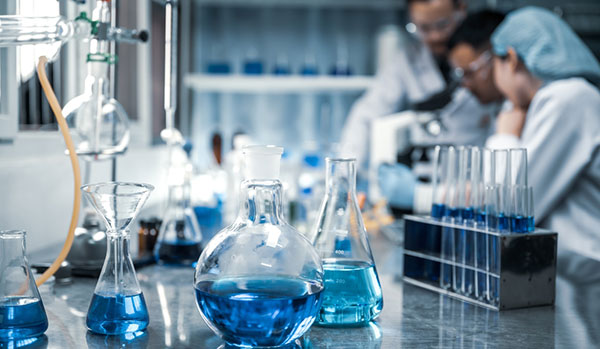
Essential Fluid Handling Products for Academic Labs
Cole-Parmer provides a comprehensive selection of fluid handling products suitable for various multi-disciplinary applications from classroom use to advanced research.
Pumps
Tubing
Fittings
Barbed Fittings: Cost-effective and simple to use for any lab setup
Luer Fittings: Standardized fittings ideal for syringe and low-pressure applications
Quick-Disconnects: Aseptic connectors that maintain fluid path integrity
Threaded Fittings: Secure connections for higher pressure or equipment installations
Flowmeters
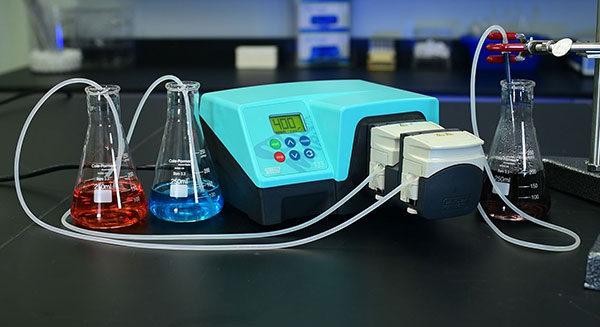
Resources for Academic Researchers and Educators
Cole-Parmer is more than a supplier; we’re a partner in your educational mission. We provide a suite of resources to support product selection, proper maintenance, and optimal lab performance.
Chemical Compatibility Database: Search thousands of chemicals to find compatible component materials critical for lab safety and long-term equipment performance.
Tubing Compatibility Database: Quickly identify which tubing materials are suitable with your fluids and applications, saving time and reducing trial-and-error in the lab.
-
Tubing Selector Tool: This step-by-step online tool makes tubing easy to find by size, material, and formulation—ideal for classroom use and research planning.
Educational Content: Access how-to guides, product overviews, and reference materials, including our printable tubing size guide. These articles and white papers help students and faculty understand products, applications, and fundamental concepts.
Expert Technical Support: Work directly with experienced application specialists who understand the unique needs of academic environments. We’re here to assist with product selection, system design, and troubleshooting.
Procurement Support: Take advantage of bulk ordering, institutional pricing, and always in stock products tailored to educational programs. Our team can help streamline approvals and simplify reordering.

Tips for Selecting the Right Fluid Handling Equipment for Education
When selecting lab equipment for educational environments, it’s important to balance performance, usability, and practicality to support both learning outcomes and lab efficiency. Key considerations include:
Ease of Use: Equipment should be intuitive for students and lab staff, with simple interfaces, clear labeling, and minimal setup time. Tools like color-coded tubing, plug-and-play pump systems, and quick-disconnect fittings support learning and efficient use.
Chemical Compatibility: Choose components based on the types of fluids used in your experiments or procedures. Using the wrong material can lead to degradation, leaks, or contamination. Compatibility tools from Cole-Parmer make selection easier and safer.
Bench Space: Academic labs often operate within space constraints. Compact, benchtop-friendly equipment allows more students to participate without overcrowding the workspace. Modular components also help maximize layout flexibility.
Maintenance: Select tools that are easy to clean, calibrate, and maintain between uses or semesters. Standardized connectors, easy-to-disassemble fluid paths, and serviceable pumps reduce downtime and support long-term reliability.
Your Partner in Learning and Discovery
Fluid handling is at the heart of modern academic labs, from teaching first-year students fluid mechanics to supporting advanced biopharma research. Cole-Parmer's portfolio of products for academia ensures your institution can deliver safe, accurate, and effective fluid control across disciplines. We help educators and researchers build better lab environments for today's students and tomorrow's discoveries.
Explore Cole-Parmer’s full range of fluid handling tools or contact a specialist to design the right solution for your program.
Frequently Asked Questions
Q: How do luer lock vs luer slip fittings compare in lab setups?
A: Luer lock fittings are used when a secure, leak-resistant connection is critical. Unlike luer slip connections, the locking mechanism helps prevent accidental disconnection during handling or pumping. In academic labs, luer lock connections are often preferred for applications involving chemicals, biological samples, or any setup where connection security directly impacts accuracy and safety.
Q: When should silicone tubing vs. PVC tubing be used in academic labs?
A: Silicone tubing is widely used lab tubing when flexibility, high purity, and biocompatibility are required, such as in peristaltic pumping, cell culture, or other biological applications. PVC tubing is often selected for general laboratory fluid transfer where higher durability and vacuum resistance is needed. Choosing between different types of tubing materials depends on the experiment’s chemical compatibility, pressure requirements, and regulatory considerations.
Q: What is media transfer tubing and why is it important in academic labs?
A: Media transfer tubing is used to safely move buffers, reagents, and prepared media without introducing contamination. TPE tubing and platinum-cured silicone tubing are commonly used due to their compliance, sterilization compatibility, and biocompatibility. In academic labs, bioprocessing tubing supports consistent experimental conditions and reproducible results, particularly in biological and chemical research.


